
PRP Hair Restoration
Concentrated growth factors delivered into thinning areas to support the follicles you still have, before you lose more ground.
What Is PRP Hair Restoration ?
PRP hair restoration is a non-surgical treatment that uses platelet-rich plasma (PRP) from your own blood to support healthier, thicker-looking hair. PRP is rich in growth factors, natural signals your body uses for healing and regeneration. When injected into the scalp, these growth factors can help nourish hair follicles, improve hair density, and slow the progression of thinning in many individuals.
At Longevity 360, PRP hair restoration is performed in a physician-led setting with careful evaluation of your overall health, scalp condition, and hair-loss pattern.
Four Reasons People Choose PRP Hair Restoration
Uses Your Own Biology
PRP comes from your own blood, which means you're leveraging your body's natural growth factors instead of synthetic chemicals or implants.
Non-Surgical Approach
PRP hair restoration is needle-based, not surgical. There are no incisions or stitches, and downtime is typically minimal compared with hair transplant surgery.
Supports Thinning Hair & Early Hair Loss
Many clients choose PRP to help improve hair density, especially in the early to moderate stages of thinning or pattern hair loss.
Can Complement Other Hair Treatments
PRP can be used alongside other therapies (like topical treatments or medications) as part of a comprehensive approach to hair and scalp health.
How Treatment Works in Practice
Consultation & Hair/Scalp Evaluation
Your provider reviews your medical history, medications, family history of hair loss, and current hair concerns. The pattern and degree of thinning are assessed to determine whether you're a good candidate and what type of results are realistic.
Blood Draw & PRP Preparation
A small amount of blood is drawn from your arm, similar to basic lab work. The sample is placed into a specialized centrifuge that separates the platelet-rich plasma from other blood components, concentrating growth factors into a usable form.
Scalp Preparation & Comfort Measures
The treatment area on your scalp is cleansed, and a topical numbing cream or local anesthetic is applied to help keep you comfortable during injections.
PRP Scalp Injections
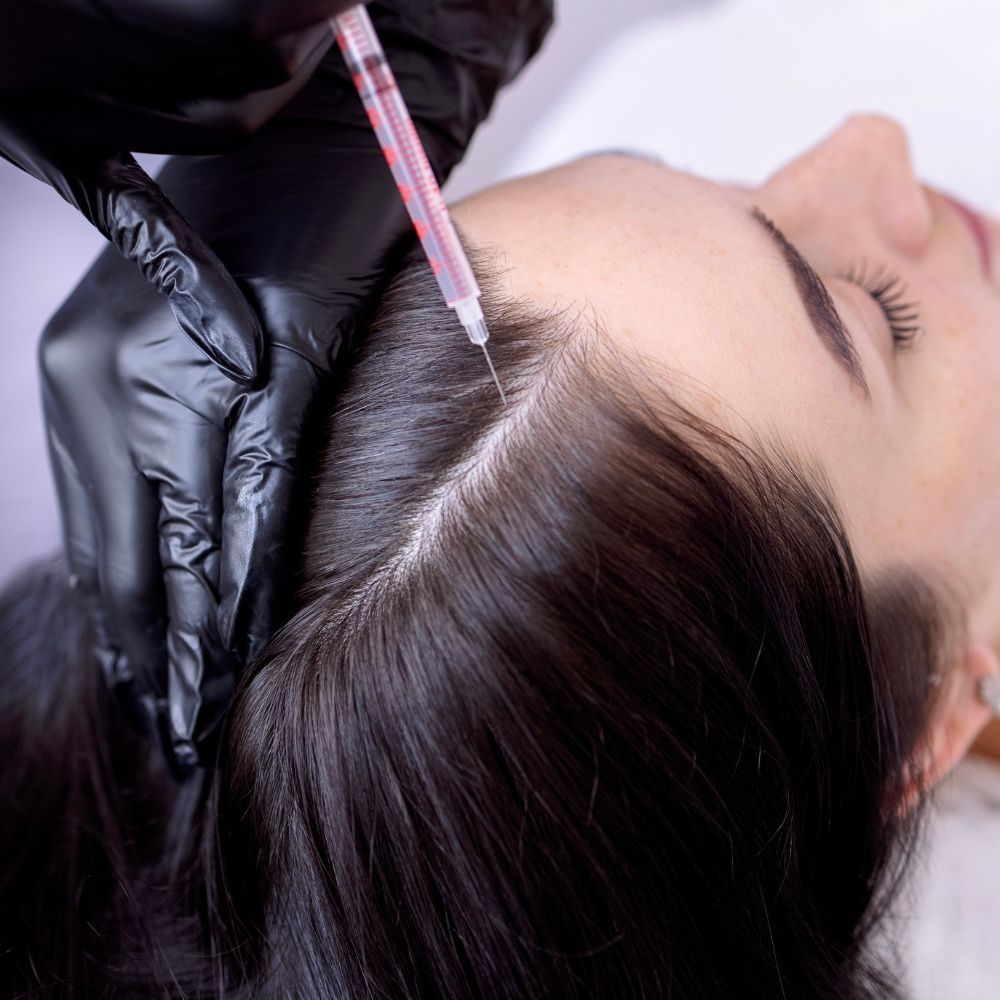
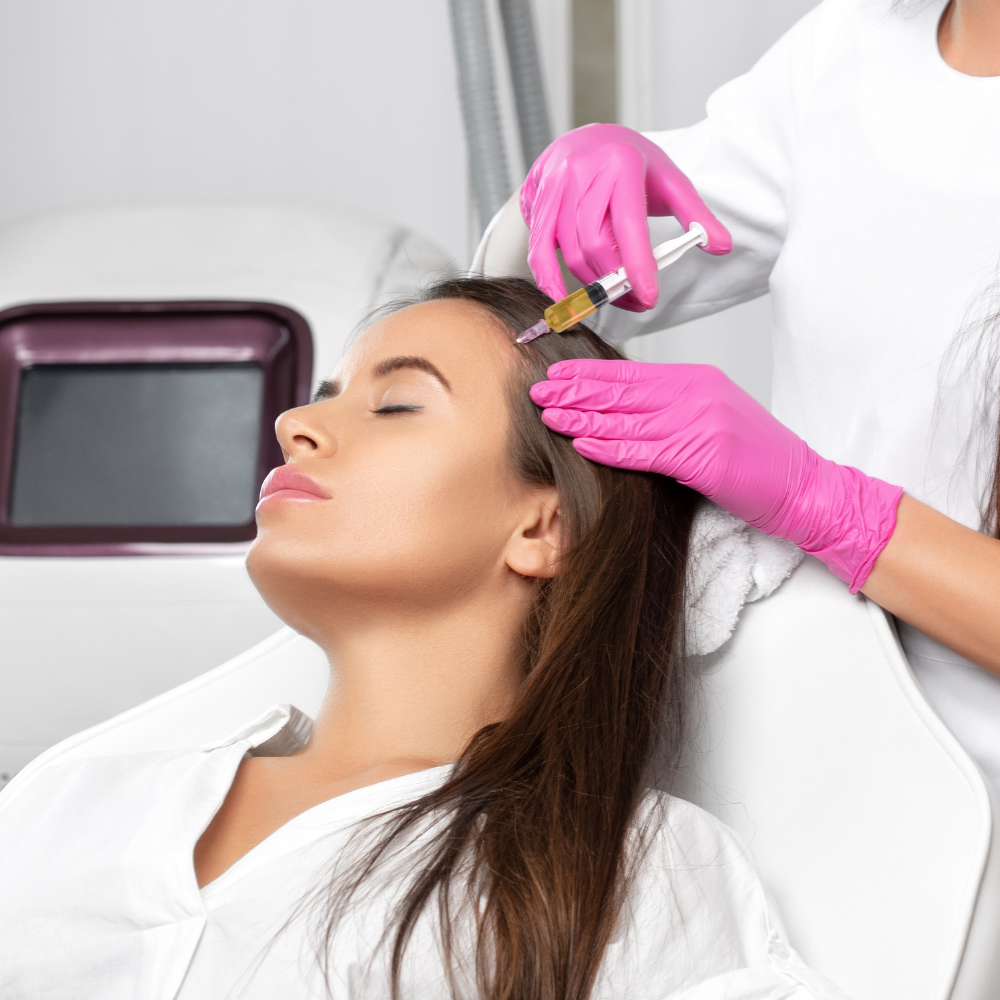
Using a fine needle, the PRP is injected into targeted areas of the scalp where thinning or miniaturization of hair follicles is most evident. Injections are carefully spaced and placed at specific depths to support follicle health.
Post-Treatment Care & Series Planning
You may experience mild scalp tenderness or sensitivity for a day or two. Your provider will explain aftercare (such as when to wash your hair and resume styling) and outline a recommended treatment series, typically multiple sessions over several months for optimal effect.
Supports Thicker-Looking Hair
Helps nourish and stimulate hair follicles, which may lead to improved hair density and fullness in many individuals.
Uses Your Own Growth Factors
Relies on your body's own platelet-derived growth factors instead of foreign substances, reducing the risk of allergic reaction.
Non-Surgical & Minimally Invasive
Involves a simple blood draw and scalp injections, without incisions, sutures, or extended recovery time.
Minimal Downtime
Most clients return to daily routines within the same day or the next, with only mild temporary scalp tenderness.
Can Be Part of a Comprehensive Plan
PRP can be combined with other hair-loss therapies and lifestyle changes to create a more robust, long-term strategy.
Physician-Led Treatment Planning
At Longevity 360, PRP hair restoration is guided by a board-certified physician and medically trained team to prioritize safety, realistic expectations, and overall health.
Frequently asked questions
PRP hair restoration typically works best as a series of treatments. Many protocols start with 3-4 sessions spaced about 4-6 weeks apart, followed by maintenance sessions every few months, depending on your response and goals.
Hair growth is gradual. Some clients notice less shedding and subtle changes in density within a few months, with more visible improvements often appearing over 3-6 months and continuing to evolve with ongoing maintenance.
You may feel pinches or pressure with the injections, but topical numbing cream and/or localized anesthetic are used to reduce discomfort. Most clients describe the procedure as tolerable.
No single treatment can guarantee a cure for hair loss. PRP is designed to support and improve hair density and follicle health, particularly in early to moderate thinning. Results vary by individual and are influenced by genetics, hormones, medical conditions, and overall health.
People with certain blood disorders, uncontrolled medical conditions, active scalp infections, or those on medications that significantly affect clotting or healing may not be ideal candidates. A thorough medical review at Longevity 360 helps determine if PRP is appropriate and safe for you.
Science & Safety of PRP Hair Restoration
PRP hair restoration is based on the concept that platelet-derived growth factors can influence cell activity in the hair follicle environment. When concentrated PRP is injected into the scalp:
Because PRP is autologous (sourced from your own blood), the risk of allergic reaction or transmission of disease is significantly reduced. Safety depends on:
Common side effects include temporary scalp tenderness, mild swelling, redness, or small bruises at injection sites. These typically resolve within a few days. Rare complications, such as infection or prolonged pain, are minimized by strict sterile technique and experienced medical oversight.
- Platelets release growth factors that may help extend the growth phase of hair follicles
- The local environment of the scalp may become more supportive of hair shaft thickness and follicle function
- Micro-needling from injections can also stimulate local blood flow and tissue repair
- Proper collection and processing using sterile, single-use kits
- Accurate understanding of scalp anatomy and hair-growth patterns
- Appropriate injection depth and spacing
- Careful patient selection and realistic expectation-setting
- At Longevity 360, PRP hair restoration is performed in a controlled clinical environment under physician-led protocols. Your overall health, medications, and potential contributing factors (like hormone imbalance or systemic illness) are considered before beginning treatment, aligning hair-restoration efforts with your broader longevity and wellness goals.
How Common Are PRP Hair Restoration Treatments?
PRP hair restoration has become a widely utilized, non-surgical option in clinics focused on hair loss and regenerative medicine. It is frequently recommended for men and women experiencing early to moderate thinning, and it is often integrated into comprehensive hair-loss programs that may also include medications, lifestyle adjustments, and supportive scalp care.
In many modern med spas and physician-led practices, like Longevity 360, PRP has become a core regenerative tool, appealing to clients who want to address hair concerns using their own biology rather than relying solely on drugs or surgery.
Book your prp hair restoration consultation
Tell us what you want to change and we will tell you honestly whether this is the right treatment for it. Consultations are led by Dr. Hasan and there is no obligation to book a treatment on the day.